- About
- Veins
-
Conditions
- Treatments
- Technology
- BOOK CONSULTATION
- Search Site
Discovering a lump under your skin can be unsettling, especially when you’re unsure what it is. Two of the most common causes are cysts and lipomas, both typically harmless but easily mistaken for one another. Understanding the key differences can help you decide when to seek professional care. At Calgary Vein & Laser, our medical team evaluates and removes benign skin and soft tissue growths safely through excision surgery, ensuring accurate diagnosis and complete removal when needed. Learn how to tell these two conditions apart and when it’s time for medical assessment. For professional evaluation and treatment, contact Calgary Vein & Laser today.
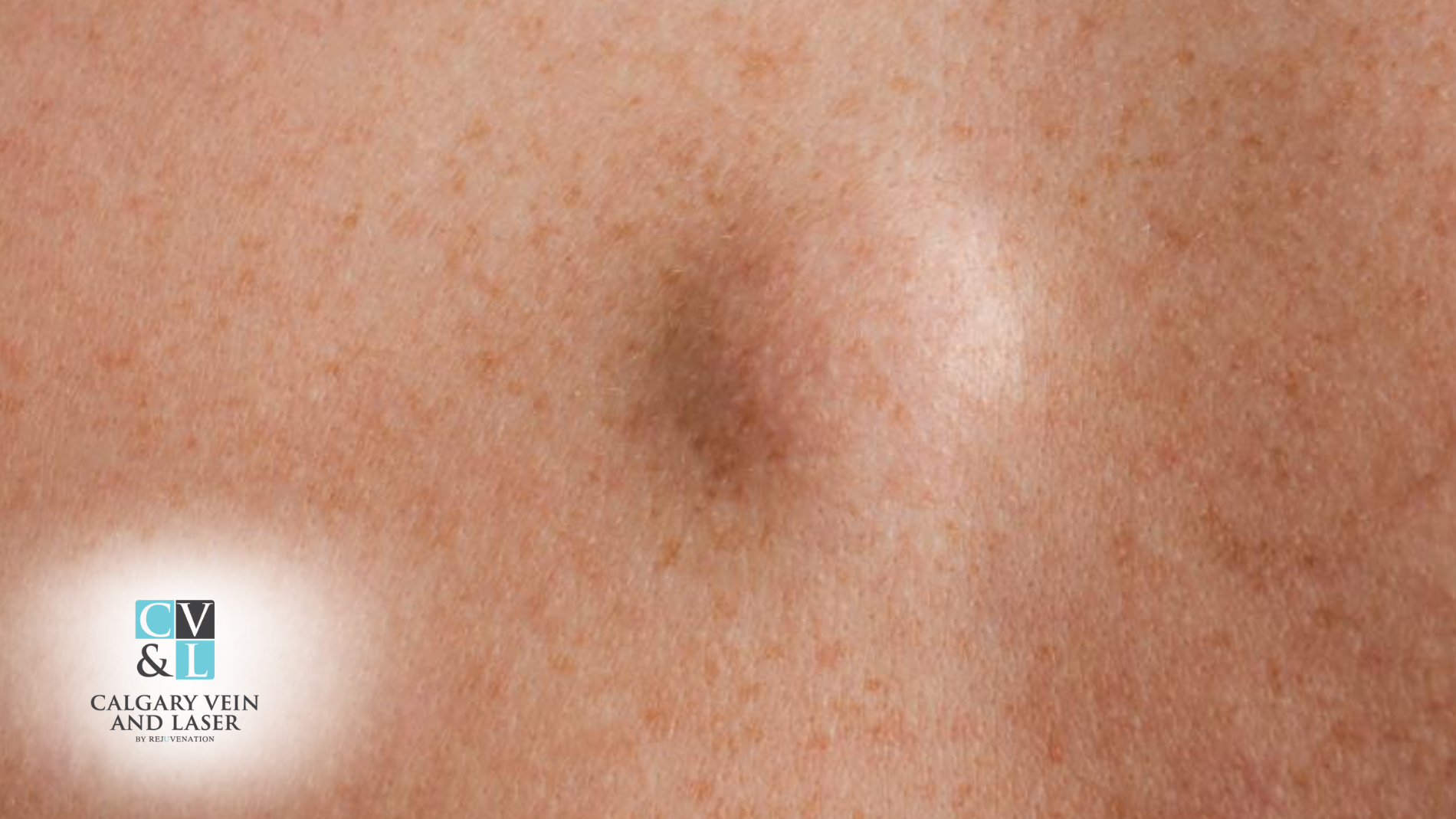
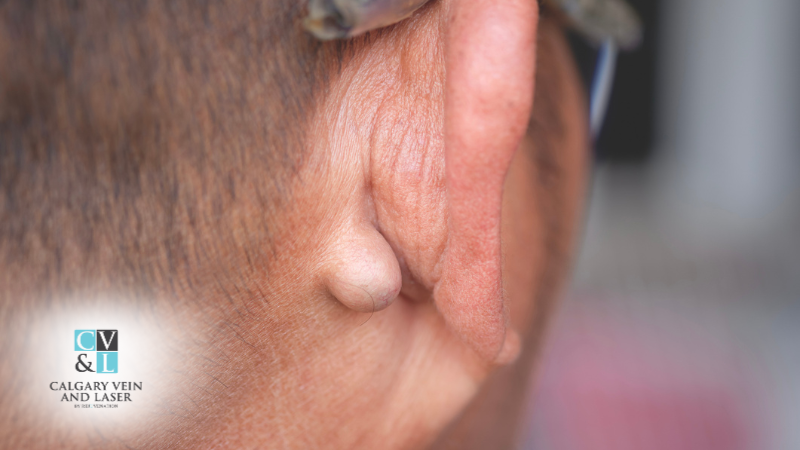
Cysts and lipomas often feel similar: small, round, and slightly raised, but they form for very different reasons. A cyst develops when skin cells or glands become blocked, trapping material like keratin or sebum beneath the surface. A lipoma, on the other hand, is a benign fatty tumour made of mature fat cells that grows slowly beneath the skin.
Both are non-cancerous, but their composition, depth, and treatment options differ. Identifying which one you have is important because the proper management, and potential for recurrence, depends on an accurate diagnosis.
Cysts are common and often mistaken for acne or pimples, but they form deeper in the skin and tend to recur if squeezed or irritated.
Typical signs of a cyst include:
Cysts contain keratin or oil, which gives them a cheesy or waxy consistency when drained. While most are harmless, infected or painful cysts may require medical removal.
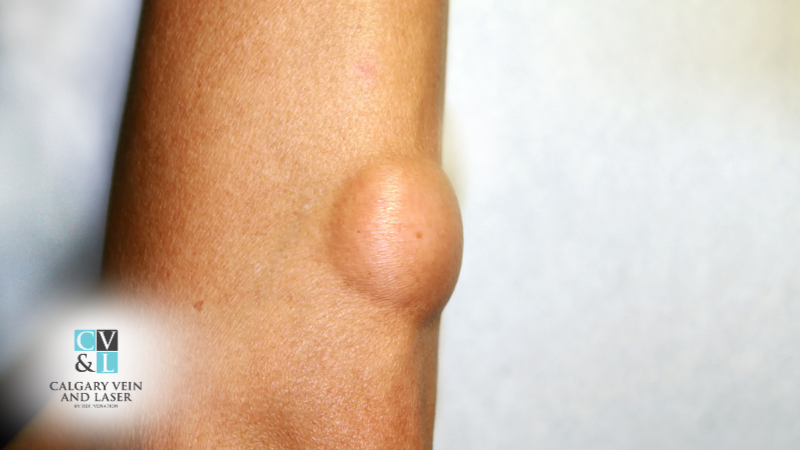
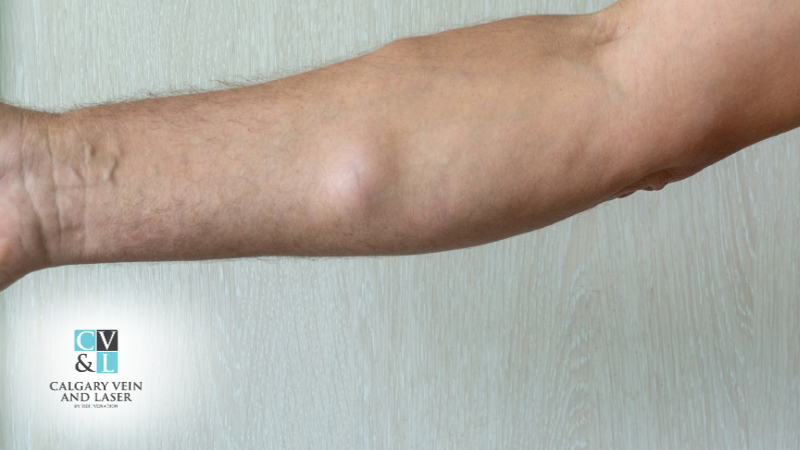
Lipomas are soft, fatty lumps that sit deeper beneath the skin’s surface. They tend to grow slowly over time and are usually painless.
Common features of lipomas include:
Unlike cysts, lipomas don’t have a visible opening, and they don’t release fluid. They’re made entirely of fat cells enclosed within a thin capsule, which must be removed to prevent regrowth.
While most cysts and lipomas are benign, any persistent or enlarging lump should be examined by a healthcare professional. Some growths that appear harmless can resemble more serious conditions, making accurate diagnosis essential.
You should book an appointment if:
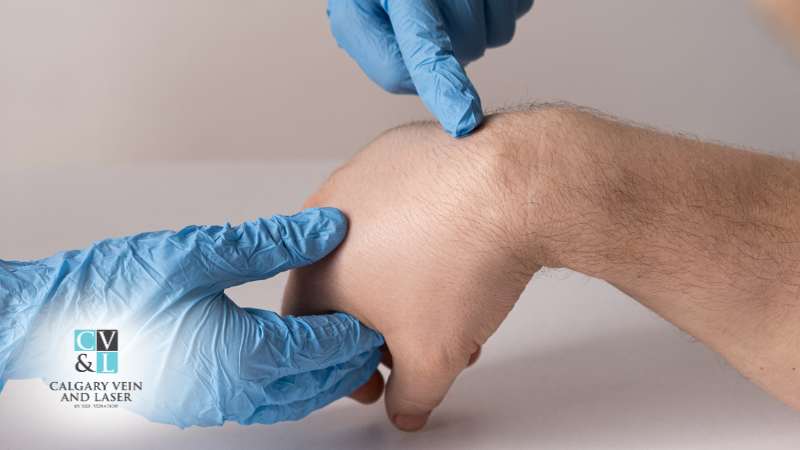
At Calgary Vein & Laser, our clinicians assess the lump’s characteristics through physical examination and, when necessary, ultrasound imaging to confirm the diagnosis before treatment.
Both cysts and lipomas can be treated with excision surgery, a straightforward procedure performed under local anesthesia. During excision, the doctor makes a small incision and removes the entire growth, including its capsule, to prevent recurrence.
Excision surgery offers long-term results, minimal downtime, and natural cosmetic outcomes. Most patients resume daily activities immediately after treatment, with complete healing within one to two weeks.
If mild redness or scarring occurs, laser treatment may be recommended afterward to smooth the skin and reduce pigmentation. Attempting to drain or squeeze a cyst or lipoma at home is not advised, as this can cause infection or incomplete removal.
Because cysts and lipomas can look similar, proper identification ensures the right treatment approach. Cysts often respond to simple removal, while lipomas, being made of fat, must be surgically excised to avoid regrowth.
At Calgary Vein & Laser, excision surgery is performed with precision and care, balancing medical safety with cosmetic results. Each case is evaluated individually to ensure the most effective, minimally invasive solution for your skin health.
Cysts are often closer to the skin’s surface and may have a small opening, while lipomas feel softer and sit deeper beneath the skin. Contact Calgary Vein and Laser today and our team can help you identify whether you have a cyst or a lipoma.
Both are benign, but medical assessment ensures they’re not something more serious.
They typically don’t. While they may remain stable, excision surgery is needed for complete removal.
Take the first step toward confidence! At Calgary Vein & Laser, we provide advanced treatments to improve vein health and enhance skin radiance. Rid yourself of varicose veins and rejuvenate your skin's complexion by booking your free consultation today—your journey to healthier veins and radiant skin starts here!
Lipoma Removal | Cyst vs. Lipoma | How to Tell the Difference